
History
Our history curriculum helps pupils gain a coherent knowledge and understanding of Britain’s past and that of the wider world. It inspires pupils’ curiosity to know more about the past. Teaching history equips pupils to ask perceptive questions, think critically, weigh evidence, sift arguments, and develop perspective and judgement. History helps pupils to understand the complexity of people’s lives, the process of change, the diversity of societies and relationships between different groups, as well as their own identity and the challenges of their time.
Intent
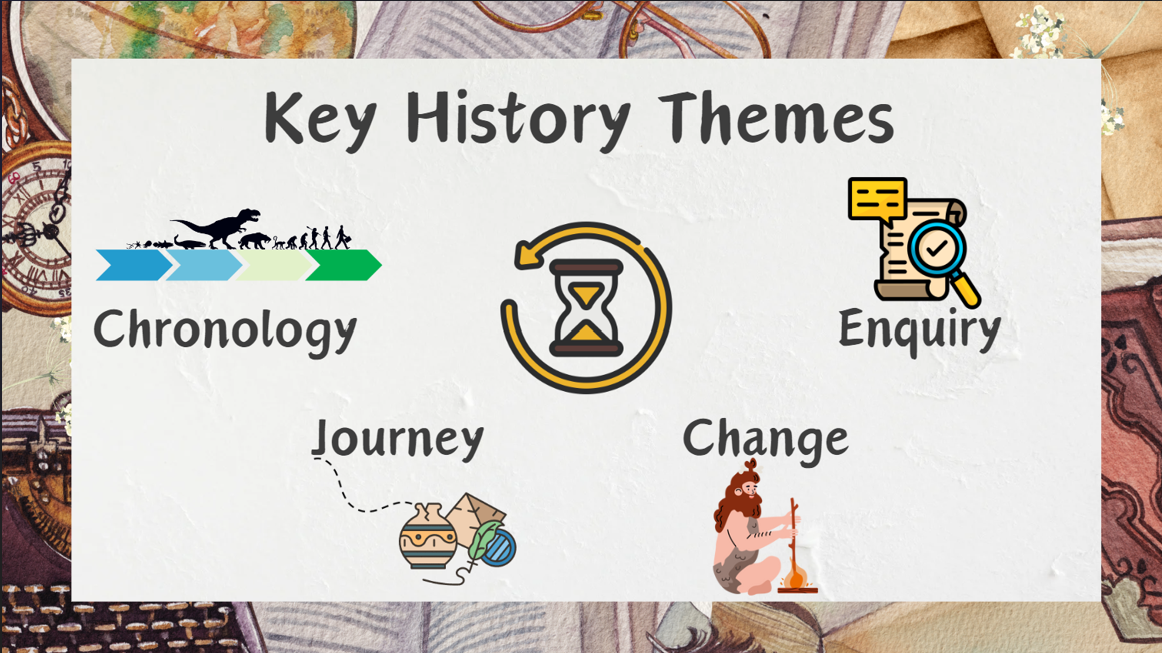
At Stokes Wood Primary, our history curriculum aims to inspire curiosity and a love of learning about the past. We want pupils to grow into thoughtful, critical and ambitious historians who understand how people’s lives have shaped Britain and the wider world. Through carefully sequenced units, pupils develop a sense of chronology, explore significant events, people and places – locally, nationally and globally – and recognise how history influences the present. Our curriculum is designed to ensure depth of understanding over time, not just coverage. We value oracy as a key tool for historical learning, encouraging pupils to question, reason and explain their ideas with confidence and clarity. By the end of primary school, children will have developed both substantive knowledge (what happened) and disciplinary knowledge (how we know), enabling them to think like historians.
Implementation
History is taught through well-structured units that build knowledge and skills progressively from EYFS to Year 6. Each unit is framed around a historical enquiry question that promotes curiosity, critical thinking and purposeful talk. Teachers use sources such as artefacts, images, texts and digital resources to help pupils investigate the past and develop historical enquiry skills such as questioning, observing, reasoning and interpreting evidence. Lessons are planned using research-based pedagogy (Rosenshine’s Principles of Instruction) to ensure learning is broken down into small bite-sized steps and pupils can articulate their understanding of new learning. Vocabulary is explicitly taught and revisited to support depth of understanding. Links are made to other subjects and our curriculum strands of Leicester: innovation, sustainability and diversity, ensuring pupils see the relevance of history to their own lives and communities. Regular retrieval practice helps pupils retain and connect prior learning, while assessment focusses on both what pupils know and how they use that knowledge.
Impact
As pupils move through school, they develop a secure chronological framework and a growing awareness of changes over time. They use subject-specific language accurately, discuss ideas with growing confidence, and demonstrate an increasing ability to reason about historical evidence. Pupils who are working well as historians can ask questions, make and justify connections and present balanced conclusions through speech and writing. They show curiosity about the past, resilience in research, and pride in their learning. Our history curriculum ensures that every child, regardless of background, can see themselves reflected in the stories of the past and can grow into an informed, open-minded citizen. By the time they leave Stokes Wood, pupils are ready to apply their historical thinking beyond school; able to question, reason and learn from the world around them.